Platinum Installs installs garage floor coatings across DFW using an epoxy base and polyaspartic topcoat on every job. Here is an honest comparison of both systems.
Polyaspartic vs Epoxy Garage Floors in DFW — Which Holds Up Better
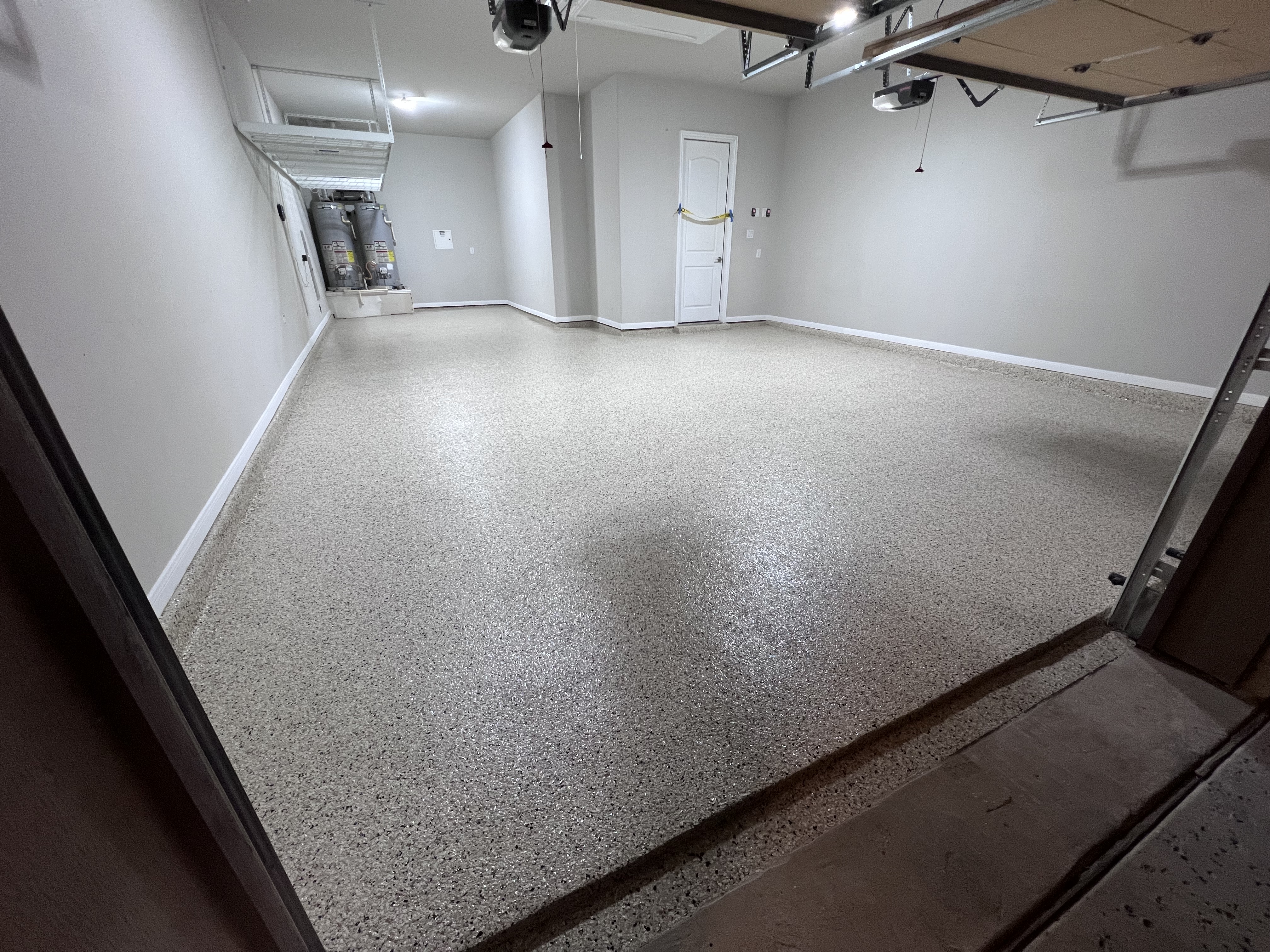
If you have been researching garage floor coatings for more than ten minutes, you have already run into the epoxy vs. polyaspartic debate. Both camps have loud advocates, and most of what you will read online was written by people trying to sell you one or the other. Here is an honest breakdown of what both systems actually do, how they perform in DFW's specific conditions, and when each one makes sense.
What They Are
Epoxy
Epoxy is a two-part coating — a resin and a hardener that react chemically when mixed. The result is a very hard, rigid surface that bonds well to concrete. 100% solids epoxy (as opposed to water-based versions) is what professionals use for garage floors. It is extremely durable and is often used as a base layer because of how well it fills and bonds to concrete pores.
Polyaspartic
Polyaspartic is a fast-curing, UV-stable topcoat chemistry. It handles UV exposure better than epoxy, and is more flexible — meaning it can expand and contract with the slab without cracking. These properties make it an excellent topcoat. Most professional systems in DFW now use epoxy as the base and polyaspartic as the topcoat, combining the strengths of both.
How Each Performs in DFW Heat
This is where it matters most. Dallas-Fort Worth summers are brutal on coatings.
Hot-tire pickup
This is the most common failure mode homeowners describe: they drive in from a summer errand, park, and when they pull out later, a patch of coating comes up with the tire. Standard epoxy is vulnerable to this because vehicle tires get very hot in DFW summers (well above 150°F) and can soften an epoxy surface enough to bond to it temporarily. A polyaspartic topcoat resists heat much better and is the standard solution to this problem. This is one reason why every system we install has a polyaspartic topcoat.
UV yellowing
Epoxy yellows when exposed to direct UV light over time. If your garage faces south or west and gets direct sun through an open door for hours a day, a straight epoxy system will show color shift within a few years. Polyaspartic does not yellow under UV. Again, a polyaspartic topcoat handles this problem, which is why the hybrid system works well in this climate.
Thermal cycling
DFW goes from 108°F in August to occasional ice in January. Concrete expands and contracts with that range. Rigid coatings crack under that stress over time — polyaspartic's flexibility gives it an advantage over a purely epoxy system for long-term durability in this climate.
When a Straight Polyaspartic System Makes Sense
Some contractors install a full polyaspartic system — no epoxy base layer. The installation is faster (polyaspartic cures quickly, so the job can be done in a day with less wait time), and the chemistry is solid. The tradeoff is that polyaspartic penetrates the concrete surface differently than epoxy — epoxy tends to create a more reliable mechanical bond on older or rougher slabs. On a clean, well-prepped new slab, a full polyaspartic system can perform very well. On an older slab with variable porosity, an epoxy base layer provides more reliable long-term adhesion.
Frequently Asked Questions — Polyaspartic vs Epoxy in DFW
What is the difference between polyaspartic and epoxy garage floor coatings?
Epoxy is a two-part resin-and-hardener system that bonds strongly to concrete and works best as a base coat. Polyaspartic is a fast-curing, UV-stable topcoat chemistry that resists heat and does not yellow under sunlight. Most professional DFW installations use both: epoxy base for bonding strength, polyaspartic topcoat for durability and UV resistance.
Does polyaspartic hold up better than epoxy in Texas heat?
Yes. A polyaspartic topcoat resists hot-tire pickup and UV yellowing far better than a straight epoxy surface. DFW vehicle tires get very hot in summer and can temporarily bond to softened epoxy — polyaspartic does not have this problem. It also does not yellow under direct sun exposure common in south- and west-facing DFW garages.
Which is better for a DFW garage floor — epoxy or polyaspartic?
The best system is a hybrid: 100% solids epoxy base with a decorative flake broadcast and a polyaspartic topcoat. You get epoxy's bonding strength at the base and polyaspartic's heat and UV advantages at the surface. A pure epoxy system is vulnerable to hot-tire pickup and yellowing; a full polyaspartic system without an epoxy base can have adhesion challenges on older slabs.
How long does a polyaspartic garage floor coating last?
A professionally installed epoxy and polyaspartic system lasts 15 to 20 years in DFW under normal residential use. The key factors are proper diamond grinding and using 100% solids products rated for Texas heat. We back every installation with a 15-year warranty.
How much does a polyaspartic garage floor coating cost in DFW?
A standard two-car garage with a full decorative flake epoxy and polyaspartic system typically costs $2,000–$3,500 in the DFW area. Price depends on slab condition, system type, and any crack repair needed. We offer free on-site estimates — call (214) 813-7474 or visit platinuminstallstx.com.
We will look at your slab and tell you honestly which system makes the most sense — and give you a written quote with a 15-year warranty behind it.
Get a Free On-Site EstimateThe Short Answer
For most DFW garages, the best system is a 100% solids epoxy base with a decorative flake broadcast and a polyaspartic topcoat. You get the bonding strength and filling properties of epoxy at the base, the beauty and texture of the flake system, and the UV and heat resistance of polyaspartic at the surface. That combination is what we install on nearly every residential job.
If a contractor is pitching you a pure epoxy system with no polyaspartic topcoat, ask them about hot-tire pickup. If they pitch a full polyaspartic system with no epoxy base on an older slab, ask about adhesion testing. The answers will tell you whether they have thought through the specifics of your garage.